A Hazard Most Workplaces Don't Think About
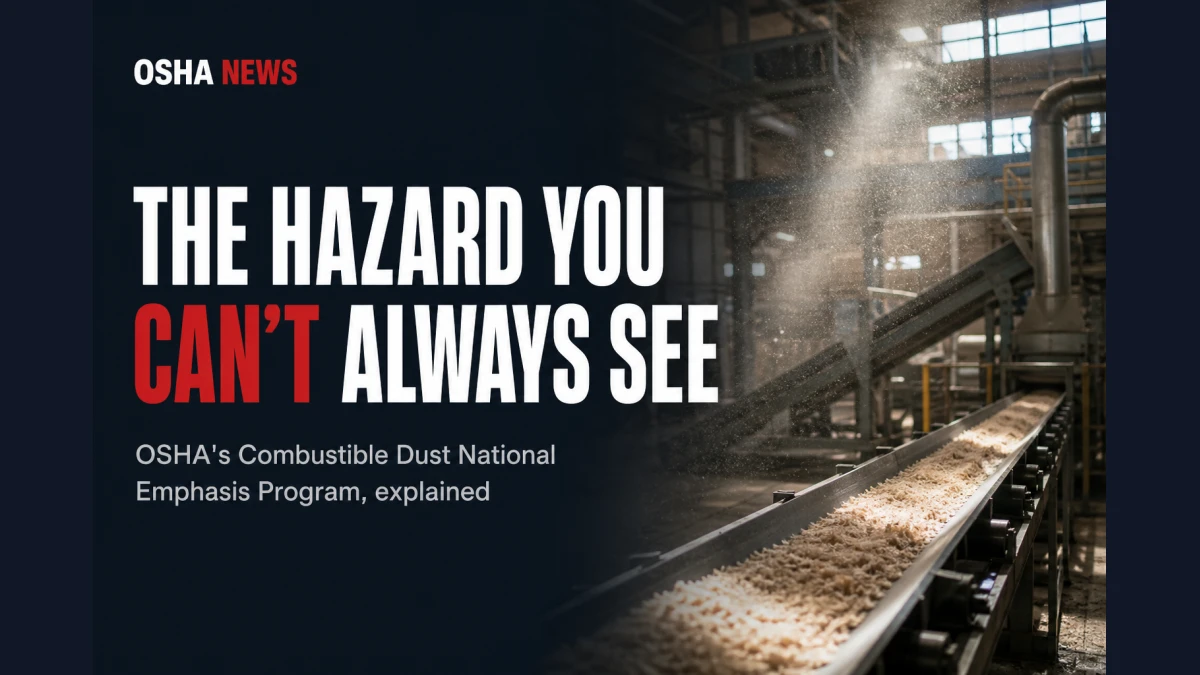
Combustible dust, the fine particulate left behind by grinding, sanding, handling grain, or processing certain metals and plastics, can ignite and explode under the right conditions, even in a facility that doesn't think of itself as handling anything flammable. OSHA has run a dedicated National Emphasis Program targeting this hazard since 2008, and it remains one of the agency's roughly dozen active emphasis programs in 2026.
What the Program Actually Does
The current directive, CPL 03-00-008, issued January 30, 2023, replaced the original 2008 version and continues directing OSHA toward facilities that generate or handle combustible dust capable of causing a fire, flash fire, deflagration, or explosion. Unlike a complaint-driven inspection, this program schedules inspections at facilities that match specific industry and hazard criteria, regardless of whether anything has gone wrong there yet.
What This Looks Like in Real Enforcement Data
In our own enforcement data, standards closely tied to dust and materials-handling hazards (29 CFR 1910.272, covering grain handling facilities specifically, and 29 CFR 1910.176, covering materials handling and storage more broadly) account for 55,159 citations and nearly $60 million in penalties on file. Separately, at least 43 accident investigation narratives in our data explicitly reference combustible dust or a dust explosion as the cause, including cases where dust combined with a flammable solvent ignited inside processing equipment.
Why a 2023 Directive Is Still 2026 News
A National Emphasis Program doesn't expire quietly, it stays active until OSHA formally revises or retires it, and this one has now directed real inspections for three years without being shelved. For a facility that generates dust as a byproduct of its actual process, whether that's grinding metal, handling grain, or sanding wood, this program means a scheduled inspection is a real possibility independent of any complaint or incident, not just a response to something that already went wrong.