A Different Kind of OSHA Case
Almost everything else on this site is about OSHA citing an employer for a hazard. This is the other half of what OSHA does: enforcing the law that protects a worker who speaks up about a hazard from being punished for it. OSHA administers whistleblower protections under more than 25 federal statutes, not just the core OSH Act, covering retaliation claims across industries from railroads to pipelines to environmental law.
The Union Pacific Case
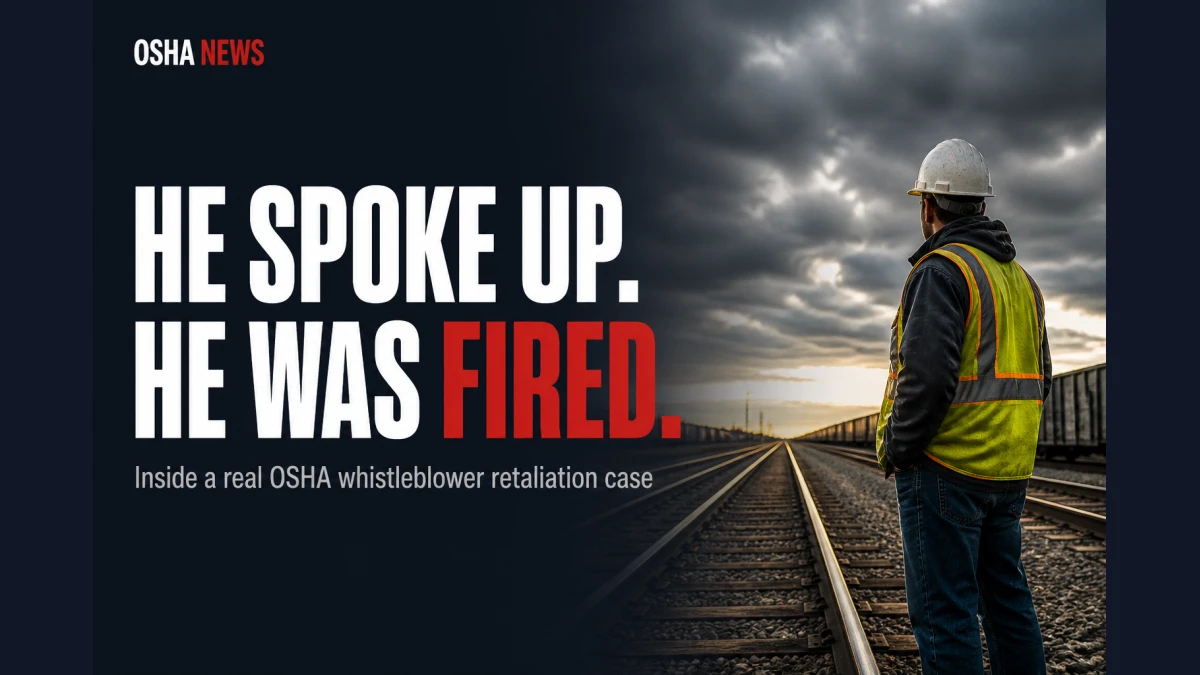
On June 10, 2026, OSHA ordered Union Pacific Railroad to pay at least $304,869 in back wages, lost benefits, and compensatory and punitive damages to a yardman in North Little Rock, Arkansas, after finding the railroad violated the Federal Railroad Safety Act by firing him. The employee had flagged nearby lightning, cited OSHA and National Weather Service lightning-safety guidance, and initiated a safety stand-down, refusing to work until the storm passed. Within minutes, Union Pacific pulled him from service; the railroad fired him on May 30, 2024, on an insubordination charge. OSHA's order also requires Union Pacific to strike any reference to the incident from his employment record. Union Pacific has filed objections and requested a hearing before a Department of Labor administrative law judge, meaning the case isn't finally resolved.
Why the Mechanism Matters
The employee didn't refuse to work out of general caution, he invoked a specific, citable safety standard (lightning-safety guidance) as the basis for stopping work. That's precisely the kind of protected activity the whistleblower statutes exist to shield: an employee using a real safety rule to justify stopping unsafe work, not acting on a vague feeling. OSHA's finding here is that acting on that guidance, and then losing his job for it within minutes, is exactly the retaliation the law prohibits.
What a Whistleblower Order Actually Requires
An OSHA whistleblower order isn't just a fine. It typically includes back pay and lost benefits, compensatory and punitive damages, attorney's fees, and in this case, a requirement to clean the worker's own personnel file of any reference to the protected activity that led to his firing. That last piece matters for anyone checking this worker's record going forward, not just for the dollar figure in the headline.